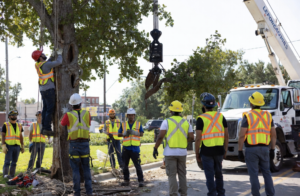
Memphis construction crews move fast. Between site preparation, grading, utility access, equipment staging, drainage planning, building schedules, inspections, and customer expectations, it can be tempting to treat tree removal as just another early step in the construction process. A tree is in the way, the project needs to move forward, and the crew has work to do. Simple enough.
But on many construction sites, removing a tree is not just a landscaping decision. It can affect safety, soil stability, stormwater behavior, permitting, property value, neighboring structures, underground utilities, and the long-term success of the project. 🌳
In a growing market like Memphis, where residential builds, commercial renovations, infrastructure improvements, and property redevelopment continue to shape the region, construction crews need to understand the risks before cutting, clearing, or disturbing mature trees. The right planning can help prevent delays, reduce liability, protect nearby structures, and keep a jobsite safer from the beginning.
Tree Removal Is a Construction Decision, Not Just a Cleanup Task
Tree removal often happens before the main construction work begins, which is why it may not always receive the same attention as framing, concrete, roofing, electrical, or site engineering. However, trees are part of the site conditions. Their roots, canopies, trunks, and surrounding soil interact with everything around them.
A mature tree may have roots extending far beyond the visible canopy. Those roots can be near foundations, sidewalks, retaining walls, utilities, septic lines, drainage paths, driveways, parking lots, and neighboring properties. Removing the tree without understanding the root system can create unexpected movement in the soil or expose hidden site problems.
Construction itself is broadly defined as the process of delivering buildings, infrastructure, industrial facilities, and related improvements, as explained by Wikipedia’s overview of construction. Because tree removal can influence the condition of the land before building begins, it belongs in the same planning conversation as grading, access, and site safety.
For Memphis construction crews, the best approach is to identify tree-related risks before equipment arrives. That means looking at the location of the tree, its condition, its relationship to the proposed construction area, and whether it should be removed, preserved, pruned, or protected during the project.
Why Memphis Construction Sites Need Tree Risk Awareness
Memphis properties often include large shade trees, older root systems, clay-heavy soils, stormwater concerns, and developed neighborhoods where construction space may be tight. A tree that looks manageable from the surface may become a major issue once work begins.
Dead, diseased, leaning, or structurally compromised trees can create safety hazards for crews, vehicles, materials, and nearby buildings. A weakened tree may fail during excavation, heavy vibration, storms, or soil disturbance. Even healthy trees can become hazardous if their root zones are cut, compacted, or buried during construction.
This matters because construction sites are already active environments with workers, machines, deliveries, temporary fencing, dumpsters, scaffolding, and changing ground conditions. Adding tree instability to that environment increases the chance of property damage or injury.
Before removing a tree, crews should evaluate whether the tree is close to power lines, roads, sidewalks, homes, commercial buildings, parking areas, fences, underground utilities, or drainage features. A rushed removal can damage more than the tree itself. It can create expensive repairs that slow down the project.
Tree Roots Can Affect Excavation, Grading, and Drainage
One of the biggest mistakes construction crews can make is only looking at the trunk and branches. The root system is often where the real construction conflict begins.
Roots can interfere with excavation for foundations, footers, utility trenches, driveways, patios, retaining walls, drainage systems, and parking lots. Cutting major roots can destabilize a tree that was originally intended to remain. Removing a tree can also leave underground voids, decaying root channels, and loosened soil areas that may affect compaction or drainage.
Memphis construction crews should also consider how tree removal changes water movement across a property. Trees absorb water, slow runoff, and help stabilize soil. Once a large tree is removed, stormwater may move differently across the site. This can matter for erosion control, basement protection, crawl spaces, pavement performance, and landscaping after the project is complete.
Tennessee has continued to focus on infrastructure and construction investment, with the Tennessee Advisory Commission on Intergovernmental Relations reporting significant public infrastructure needs across the state. That kind of statewide focus on infrastructure, documented by TACIR’s report on Tennessee public infrastructure improvements, reinforces why site conditions should be treated seriously before construction begins.
Permits, Property Lines, and Local Requirements Should Come First
Tree removal can become complicated when a tree sits near a property line, right-of-way, drainage easement, shared fence, public sidewalk, commercial entrance, or utility area. Construction crews should not assume every tree on or near a jobsite can be removed without review.
Depending on the property, project type, and location, there may be municipal requirements, neighborhood restrictions, commercial property standards, development conditions, or utility coordination issues involved. Even when formal tree permits are not required, documentation is still valuable.
Before removal, crews should confirm ownership of the tree, identify nearby easements, check project plans, and communicate with the property owner or general contractor. If the tree affects public access, roadway visibility, sidewalk safety, or stormwater management, the decision may need extra review.
Local construction activity often involves coordination between city, county, and state agencies. For example, Shelby County’s current construction information shows how road, bridge, and public improvement projects can involve multiple layers of planning and shared responsibility. Private construction crews should bring the same mindset to tree-related decisions on their own jobsites.
An Arborist Can Help Prevent Costly Construction Delays
Calling an arborist before removing a tree can save construction crews from mistakes that become expensive later. An arborist can evaluate tree health, identify structural defects, assess root conflicts, recommend safe removal methods, and help determine whether a tree can be preserved during construction.
This is especially important when a project owner wants to keep certain trees for shade, appearance, privacy, erosion control, or property value. Construction damage can kill a tree slowly. A tree may look fine during the job, then decline months later because its roots were cut, compacted, or covered. When that happens, the property owner may blame the construction process.
A professional arborist can also help crews decide where to place equipment, temporary fencing, materials, soil piles, and access paths to reduce damage to trees that are staying. For projects where tree removal is unavoidable, an arborist can help ensure the work is done with better planning and fewer surprises.
For crews or property owners searching locally, Arborist Near Me Memphis is an important resource when tree safety, construction planning, and responsible removal need to be handled before the job moves forward.
Tree Removal Around Roads, Utilities, and Access Points Requires Extra Care
Construction crews often work near driveways, alleys, parking lots, roads, loading areas, and utility corridors. These are the same places where tree removal can be most sensitive.
Branches can interfere with equipment access. Roots can affect pavement. Tree trunks can limit sightlines. Dead limbs can fall near workers or traffic. Underground utilities can run through the root zone. Removing a tree in these areas requires planning because the jobsite may affect not only the construction crew, but also pedestrians, drivers, tenants, customers, neighbors, and utility workers.
The Tennessee Department of Transportation continues to maintain information on transportation projects through its TDOT transportation projects page, which highlights how road-related work requires careful planning, regional coordination, and attention to public impact. While private construction sites are different from highway projects, the lesson is similar: work near access routes and public movement should be planned carefully before crews begin.
For Memphis contractors, that means tree removal should be discussed during pre-construction meetings, not after a machine operator discovers the tree is blocking access. The earlier the issue is addressed, the easier it is to plan safe sequencing.
Large Construction Projects Show Why Site Planning Matters
Memphis continues to see major construction and infrastructure activity, including projects connected to transportation, commercial development, and public facilities. Large projects receive attention because they involve budgets, schedules, public safety, and long-term impact. Smaller construction jobs may not make headlines, but they still benefit from the same kind of careful site planning.
For example, Memphis International Airport’s construction information shows how major property improvements involve phased planning and modernization work. Engineering News-Record has also covered how big projects are supporting the Memphis construction market, including significant investment activity in the region.
The takeaway for local construction crews is simple. Whether the job is a residential addition, a commercial renovation, a parking lot expansion, a utility upgrade, or a full site redevelopment, early planning protects the schedule. Tree removal should not be treated as an afterthought because it can affect everything that happens next.
Crews Should Document Tree Conditions Before Work Begins
Documentation protects everyone involved. Before removing or working near trees, construction crews should take photos, note the location of trees, identify visible defects, and record any concerns about leaning, cracks, cavities, dead limbs, root damage, fungi, soil heaving, or proximity to structures.
This documentation can be useful if a property owner, neighbor, inspector, insurance company, or project manager has questions later. It can also help clarify whether tree damage existed before construction began or occurred during the project.
A simple tree review can be included in the site preparation checklist. Crews should note which trees are to be removed, which are to remain, and which require protection. Tree protection zones should be marked clearly so equipment operators know where not to drive, dig, park, or store materials.
This kind of planning is not just about tree preservation. It is about reducing confusion, preventing conflict, and keeping the construction process cleaner from start to finish.
Safe Tree Removal Supports a Safer Jobsite
Tree removal can involve chainsaws, rigging, lifts, cranes, falling limbs, heavy trunks, unstable ground, and nearby structures. When removal happens on an active or soon-to-be-active construction site, the risks increase because other work may be happening nearby.
Crews should consider whether the tree can be removed safely with available space, whether traffic or pedestrian control is needed, whether utility companies must be contacted, and whether the removal should happen before or after certain site preparation steps.
Removing a tree without proper planning can damage equipment, delay subcontractors, block access, create debris hazards, or leave stumps and roots that interfere with grading. In some cases, it can also create emergency conditions if the tree shifts, splits, or falls unpredictably.
The safest construction crews are the ones that slow down at the beginning so the rest of the job can move faster. Tree removal is one of those moments where careful planning can prevent major problems.
Conclusion
Memphis construction crews should know that tree removal is more than clearing space. It is a site safety issue, a planning issue, a drainage issue, a utility issue, and often a liability issue. Trees interact with soil, structures, access points, neighboring properties, and long-term land performance. Removing one without understanding those connections can create problems that reach far beyond the stump.
Before a tree is removed, crews should evaluate its condition, location, root system, impact on drainage, relationship to utilities, and effect on the construction schedule. They should document existing conditions, communicate with the property owner, and bring in a qualified arborist when the tree presents risk or uncertainty.
In a city where construction and redevelopment continue to shape neighborhoods, commercial properties, roads, and public spaces, responsible tree planning helps Memphis crews work smarter. It protects workers, reduces delays, supports better site outcomes, and helps the finished project stand on stronger ground.