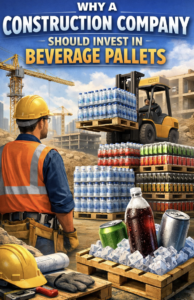
Construction runs on momentum. Crews show up early, schedules stack tight, and production depends on keeping people safe, fueled, and moving. That is exactly why investing in beverage pallets is not a “nice-to-have” perk. It is a practical operations upgrade that strengthens safety, productivity, logistics, and jobsite professionalism in one move.
Beverage pallets are purpose-fit pallets and palletized systems for storing, transporting, and staging drinks at scale. That can mean bottled water, electrolyte beverages, coffee, energy drinks, and even mixed-case jobsite “hydration packs.” When a construction company treats beverages as a managed supply category, not an afterthought, the payoff shows up in fewer slowdowns, cleaner staging, and better control over one of the most common daily needs on every site.
Hydration Is a Safety System, Not a Snack Run
Heat risk is not theoretical in construction, and hydration is one of the simplest controls a contractor can manage consistently. Construction-industry reporting has tracked how heat protections are moving toward more formal requirements, including expectations around water availability, rest, and heat illness planning. That direction is reflected in coverage of OSHA’s heat rule activity and industry response. OSHA proposes rule to protect workers from extreme heat
Jobsite hydration also matters outside peak summer. Cold-weather dehydration is real, and industry safety guidance continues to emphasize that crews can get behind on fluids even when they do not feel sweaty. Help Your Construction Crew Weather Winter on the Jobsite
Beverage pallets make hydration reliable. Instead of scattered cases in truck beds, half-empty coolers, and last-minute store runs, a contractor can stage standardized pallet loads near break areas, laydown yards, or designated hydration stations. That consistency reduces preventable fatigue, helps supervisors enforce water availability, and supports a culture where safety is built into daily operations.
Higher Productivity Through Fewer Micro-Stoppages
Construction loses time in small, repeated ways. One person leaves for drinks. Someone else asks where the water is. A foreman pauses work to sort supplies. Over a week, those minutes add up.
A beverage pallet program replaces chaos with a simple rhythm:
-
One delivery or pickup covers the whole crew.
-
One staging location stays stocked and organized.
-
One reorder point triggers replenishment.
-
One designated pallet footprint prevents sprawl and clutter.
The work stays the focus. Crews stay on task. Breaks become actual breaks instead of supply runs. In tight production windows, removing friction is real money.
Cleaner, Safer Jobsites With Less Trip Hazard and Less Waste
Loose cases and scattered empties turn into trip hazards and visual clutter. Palletized staging keeps beverages contained in a defined area. That alone improves housekeeping, makes walk paths clearer, and reduces the “stuff everywhere” feel that clients and inspectors notice.
It also improves waste control. When beverages are managed by pallet, the company can stage bins for plastic, cardboard, and returns right beside the pallet footprint. Cleanup becomes routine, not reactive.
For teams that want to educate staff on the basics of pallets and standardized material handling, a quick reference like Pallet (Wikipedia) supports consistent terminology and internal training without reinventing the wheel.
Better Logistics Across Multiple Jobsites
Many contractors are no longer running one big site. They are running multiple crews, multiple addresses, and constant mobilization. Beverage pallets make hydration scalable across that reality.
Logistics-focused construction coverage keeps pointing to modernization and better coordination as competitive advantages. When contractors borrow proven logistics habits, including standardized loads and tracking, jobsite supply gets cleaner and faster. Lessons from Logistics: Embrace Technology to Modernize Construction
Beverage pallets fit that modernization perfectly:
-
One standard pallet build can be duplicated across sites.
-
Inventory can be tracked by crew, job number, or week.
-
Deliveries can be scheduled to match concrete pours, framing pushes, or roofing phases.
-
Emergency stock can be staged for peak heat days or storm response.
It is a simple “ops win” that makes the company feel more professional internally and externally.
A Stronger Heat-Response Plan With Real Execution
Heat planning is only as good as execution. Industry guidance often includes practical hydration targets and reminders that structured hydration practices prevent incidents and reduce risk. Beat the Heat
A beverage pallet system turns that guidance into something supervisors can actually manage. Crews do not rely on memory, convenience stores, or someone’s personal cooler. The site has water. The site has electrolyte options. The site has a visible, repeatable hydration setup that supports the daily safety brief.
Construction reporting has also highlighted that workers can arrive to work already dehydrated and still be at risk under moderate conditions. That means hydration needs to be present early and consistently, not only during extreme heat spikes. Turner heat study finds workers at risk even on ‘cooler’ summer days
The Right Pallet Choice Improves Durability and Hygiene
Not every pallet is the same, and beverages add their own demands: condensation, spills, sticky residue, and frequent handling. A construction company investing in beverage pallets can choose options that match jobsite reality.
Common practical considerations include:
-
Washable surfaces that stay cleaner over time
-
Durability under repeated forklift and pallet-jack cycles
-
Stability for stacked cases in transit
-
Compatibility with racking if a contractor stores pallets in a yard or warehouse
-
Containment strategies that reduce mess when a case breaks
When beverage staging is cleaner and sturdier, it reduces rework, reduces spoilage, and keeps storage areas safer.
Cost Control You Can Measure
Beverage spending often leaks through small, uncontrolled purchases. Crews expense drinks differently. Sites buy at different prices. Inventory disappears. Cases get damaged. The result is inconsistent cost and inconsistent availability.
A beverage pallet approach supports:
-
Standard ordering by case and by pallet
-
Better pricing through volume purchasing
-
Reduced emergency purchases at retail pricing
-
Lower damage and loss through organized staging
-
Predictable weekly or phase-based consumption planning
That turns beverages from an unpredictable line item into a managed supply category.
A Client-Facing Signal of Professionalism
Clients notice organization. General contractors notice subcontractors that run clean. Owners notice when a site looks controlled. A beverage pallet station placed neatly with labeled bins and a consistent layout signals a contractor that manages details.
It also supports culture. Workers notice when leadership invests in their daily reality. Morale improves when the basics are handled without drama, and that tone influences retention and recruiting in a labor market that still rewards contractors who treat crews well.
Conclusion
A construction company that invests in beverage pallets is investing in operational discipline. It is safer hydration delivery, less time wasted, cleaner staging, stronger logistics, and better cost control wrapped into one practical system. Construction-industry coverage continues to emphasize heat risk, worker protection, and modernization of jobsite logistics, and beverage pallets sit right at that intersection. OSHA’s proposed heat rule: It’s time to get HIIPP
The best part is that this investment is simple to implement. Standardize the pallet build, choose durable pallets that match your handling equipment, set staging rules, and manage replenishment like any other critical supply. The crews feel it immediately, the schedule benefits quietly, and the company looks more professional in every direction. ✅