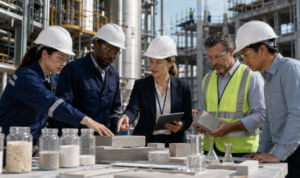
The construction industry often gets attention for towering cranes, concrete pours, new subdivisions, commercial developments, bridges, highways, and massive infrastructure projects. What people do not always see is the science behind the scenes. Long before a contractor installs flooring, seals a roof, protects steel, pours concrete, waterproofs a foundation, or applies a specialty coating, chemical manufacturing companies have already played a major role in making that project stronger, safer, more efficient, and more durable.
Modern construction is no longer built with raw materials alone. It is built with engineered solutions. Adhesives, sealants, coatings, waterproofing systems, concrete additives, corrosion inhibitors, cleaning chemicals, insulation materials, flooring compounds, industrial lubricants, fire-resistant treatments, and protective finishes all help shape the way buildings and infrastructure perform over time. These materials may not always be visible once a project is complete, but they often determine whether that structure can withstand weather, moisture, chemical exposure, heavy use, and changing environmental demands.
As construction companies face tighter timelines, higher material costs, labor shortages, sustainability expectations, and stricter safety requirements, the relationship between construction and chemical manufacturing has become more important than ever. Industry resources such as Construction Dive continue to report on the trends affecting builders, contractors, developers, and suppliers, and many of those trends connect directly to the advanced materials being used on job sites every day.
Chemical Manufacturing Is Behind Many Modern Building Materials
When most people think about construction materials, they think about lumber, steel, concrete, glass, roofing, drywall, brick, and stone. Those materials still matter, but the performance of those materials often depends on chemical innovation. Concrete may be strengthened with admixtures. Steel may be protected with anti-corrosion coatings. Wood may be treated for durability. Roofing systems may depend on membranes, adhesives, and sealants. Flooring may require resins, epoxies, primers, and finish coatings.
Chemical manufacturers help create the formulas that allow construction materials to last longer and perform better under pressure. A parking garage exposed to water, oil, road salt, and vehicle traffic needs more than concrete alone. A hospital floor needs coatings that support sanitation, durability, and easy maintenance. A warehouse roof needs sealing systems that can stand up to heat, UV exposure, and heavy rain. A manufacturing facility may need chemical-resistant flooring and protective wall coatings to maintain safety and compliance.
The construction industry is built on reliability. Materials need to perform as expected, because failure can lead to expensive repairs, safety risks, downtime, and liability. That is why chemical manufacturing companies are so valuable to contractors, engineers, architects, and property owners. They help provide the specialized products that make buildings stronger from the inside out.
Construction Depends on Better Adhesives, Sealants, and Coatings
One of the biggest ways chemical manufacturing companies support construction is through adhesives, sealants, and protective coatings. These products are used across residential, commercial, industrial, and infrastructure projects. They help bond materials, close gaps, prevent leaks, resist chemicals, reduce corrosion, and protect surfaces from wear.
Sealants are especially important because water intrusion is one of the most common causes of building damage. A small failure around a window, roofline, expansion joint, wall penetration, or foundation area can create major problems over time. Mold, rot, structural damage, interior staining, insulation failure, and energy loss can all begin with moisture finding a path into a building. High-quality chemical sealants help prevent those issues by creating flexible, durable barriers.
Coatings are just as important. Protective coatings are used on steel, concrete, masonry, floors, roofs, tanks, pipes, bridges, and equipment. These coatings can be designed to resist abrasion, corrosion, heat, chemicals, moisture, and UV exposure. In industrial construction, coatings are often essential because the building may be exposed to harsh chemicals, constant cleaning, heavy machinery, or extreme temperatures.
Publications such as Engineering News-Record regularly cover major construction projects, infrastructure work, and industry innovation. Behind many of those large-scale projects are chemical products that help extend service life, reduce maintenance needs, and improve long-term performance.
Concrete Innovation Is Changing the Way Structures Are Built
Concrete remains one of the most important materials in construction, but modern concrete is far more advanced than many people realize. Chemical admixtures can change how concrete flows, cures, strengthens, resists water, handles temperature changes, and performs under pressure. These additives allow contractors to work more efficiently while improving the final quality of the structure.
Some admixtures help concrete set faster, which can be useful when schedules are tight or weather conditions are challenging. Others slow the curing process to make placement easier in hot climates. Some improve workability so concrete can be pumped, poured, or finished more effectively. Others increase strength, reduce shrinkage, improve durability, or make concrete more resistant to freeze-thaw cycles.
Chemical manufacturing companies also contribute to repair mortars, grouts, bonding agents, curing compounds, concrete cleaners, surface hardeners, and waterproofing products. These products are used in everything from sidewalks and driveways to stadiums, bridges, commercial towers, manufacturing plants, and public infrastructure.
According to the U.S. Census Bureau’s construction spending resources, construction activity represents a major area of economic measurement in the United States. That scale makes material performance extremely important. When billions of dollars are being invested into construction, better materials can help reduce waste, extend building life, and protect the value of those projects.
Sustainability Is Pushing Chemical Manufacturing Forward
Sustainability has become a major focus in construction. Developers, builders, municipalities, and property owners are looking for ways to reduce waste, improve energy efficiency, lower emissions, and choose materials that support long-term environmental goals. Chemical manufacturing companies are helping meet those demands by developing products that are more efficient, longer lasting, lower in volatile organic compounds, and better suited for green building practices.
Low-VOC paints, adhesives, coatings, sealants, and flooring systems can help improve indoor air quality. Waterproofing products can help buildings last longer and avoid premature repair. Better insulation materials can reduce energy use. Protective coatings can extend the life of steel, concrete, and roofing systems, reducing the need for replacement materials. Cleaning and maintenance chemicals can also be formulated to support safer use and environmental responsibility.
The Associated General Contractors of America has covered the importance of green construction and the role contractors play in building more efficient structures. Chemical manufacturing fits directly into that movement because many sustainable construction goals depend on advanced material science.
Sustainability in construction is not only about what gets built. It is also about how long it lasts. A building that performs well for decades is more resource-efficient than one that requires constant repair, replacement, or renovation. Chemical products that protect structures from water, corrosion, chemicals, heat, and wear can help reduce the environmental impact of construction over time.
Industrial and Commercial Construction Need Specialized Chemical Solutions
Industrial and commercial construction projects often have more demanding requirements than standard residential buildings. Warehouses, chemical plants, food processing facilities, hospitals, laboratories, schools, manufacturing sites, parking garages, data centers, and transportation hubs may all require specialized chemical products.
A food processing facility may need flooring that resists moisture, cleaning chemicals, and bacteria growth. A data center may need fire-resistant materials, anti-static flooring, precision cleaning solutions, and thermal management support. A chemical plant may require corrosion-resistant coatings, containment systems, industrial cleaners, and safety-focused surface treatments. A parking garage may need deck coatings, concrete repair materials, expansion joint sealants, and anti-slip finishes.
This is where local sourcing and supplier relationships become especially valuable. Contractors and facility managers often search for reliable suppliers who understand industrial needs, delivery timelines, and product compatibility. For businesses looking for regional support, Chemical Manufacturing Companies Near Me can be an important search when trying to find chemical manufacturing support for construction-related applications.
The right chemical partner can help construction companies source products that fit the specific demands of a project. That may include custom formulations, bulk supply, specialty packaging, technical support, and guidance on product use. In construction, choosing the wrong material can create delays and costly failures. Choosing the right chemical solution can help a project move forward with greater confidence.
Construction News Shows a Growing Focus on Materials and Supply Chains
Construction is heavily affected by material availability, pricing, logistics, and supply chain reliability. When materials are delayed or costs increase, entire projects can be affected. Chemical manufacturing companies help support construction supply chains by producing and distributing many of the products contractors rely on to keep work moving.
The construction industry has seen how important supply chain planning can be. Adhesives, coatings, insulation materials, cleaning chemicals, waterproofing products, concrete additives, and other specialty materials may not always receive the same public attention as steel or lumber, but they can still delay a project when they are unavailable. A contractor cannot complete a roof without the right adhesive or sealant. A flooring crew cannot finish a commercial space without the correct primer, coating, or curing product. A concrete repair project cannot move forward without compatible bonding agents, patching materials, and protective treatments.
Resources such as The Construction Index and Construction Business Owner regularly highlight the business side of construction, including market conditions, materials, contractors, and industry developments. These topics matter because construction success depends on more than skilled labor. It also depends on dependable products, strong supplier networks, and materials that arrive when they are needed.
Chemical manufacturing companies that serve construction markets help reduce uncertainty. They can support contractors with consistent supply, product knowledge, and chemical solutions designed for real-world job site conditions.
Advanced Materials Are Improving Safety and Building Performance
Safety is one of the most important priorities in construction. Chemical manufacturing contributes to safety in several ways. Fire-resistant coatings, anti-slip flooring systems, corrosion inhibitors, cleaning chemicals, mold-resistant treatments, protective sealants, and high-performance insulation materials all help create safer buildings and job sites.
Construction workers also rely on chemicals for equipment maintenance, surface preparation, dust control, sanitation, and cleanup. Properly formulated products can help reduce hazards, improve working conditions, and support compliance with safety standards. In finished buildings, chemical products continue to contribute to safety by protecting surfaces, improving hygiene, preventing moisture damage, and reducing the risk of structural deterioration.
The broader role of construction in society is explained in Wikipedia’s overview of construction, which describes construction as the process of delivering buildings, infrastructure, and industrial facilities. Chemical manufacturing supports that process by improving the materials used to build and maintain those structures.
As buildings become more advanced, the materials inside them must keep up. A modern commercial building may include energy-efficient systems, specialty coatings, advanced roofing, high-performance flooring, fire protection products, waterproofing membranes, and sustainable finishes. Chemical manufacturers help make those systems possible.
The Future of Construction Will Be Built With Science
The future of construction will not only be shaped by architects, engineers, contractors, and developers. It will also be shaped by chemists, product developers, material scientists, manufacturers, and suppliers. As the industry moves toward stronger, smarter, more efficient, and more sustainable buildings, chemical manufacturing companies will continue to play a quiet but powerful role.
New formulas will help materials last longer. Better coatings will protect infrastructure from corrosion. Smarter sealants will improve building envelopes. More efficient adhesives will support faster installation. Advanced concrete additives will help contractors work in difficult conditions. Safer cleaning and maintenance products will support healthier facilities. Sustainable chemical solutions will help construction companies meet environmental expectations while still delivering durable projects.
This connection between construction and chemistry is not a passing trend. It is part of how modern building works. Every time a contractor uses a waterproofing membrane, applies an epoxy floor, seals a joint, protects steel, repairs concrete, installs insulation, coats a roof, or prepares a surface, chemical manufacturing is part of the process.
Conclusion
Chemical manufacturing companies may not always be the most visible part of the construction industry, but they are one of the most important. They help create the products that protect buildings, strengthen materials, improve safety, support sustainability, and keep projects moving forward. From concrete admixtures and waterproofing systems to coatings, adhesives, sealants, cleaners, and specialty industrial solutions, chemical manufacturing is woven into nearly every stage of modern construction.
As construction companies face rising expectations for durability, efficiency, safety, and environmental responsibility, the demand for better chemical solutions will continue to grow. The future of construction will be built with stronger science, smarter materials, and trusted manufacturing partners that understand what job sites, facilities, and infrastructure projects truly need.
Chemical manufacturing companies are not just supporting construction. They are quietly helping build its future.