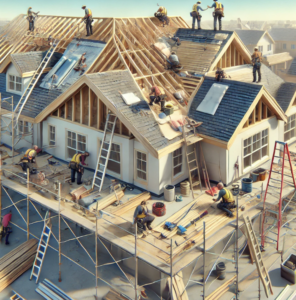
Roof repair is one of those construction lanes where trust, speed, and craftsmanship meet real urgency. When a leak shows up, property owners want clarity, clean communication, and a crew that arrives prepared. A roof repair services construction company can be built fast, but it only becomes durable when the foundation is solid: licensing, safety, estimating discipline, reliable suppliers, and a reputation that spreads through steady wins, not loud promises. 🧰
Choose a Focus and Build Your Company Around It
Roof repair is a wide category, and the strongest new companies start by picking a clear lane and executing it exceptionally well. Residential leak diagnostics and repairs, storm-response tarping and temporary dry-ins, commercial flat-roof repairs, metal roof restoration, and specialty flashing work all require different tools, crews, and sales approaches. The more specific the early offer, the easier it is to price accurately, train technicians, and market with confidence.
Define the “non-negotiables” that shape your work: quality standards, documentation expectations, jobsite cleanliness, and communication timelines. These become the identity of your company long before you have a big logo on a warehouse. Keep your first service list tight, then expand intentionally after your estimating, scheduling, and warranty systems are consistent. 🏠
Authority link: Engineering News-Record roofing coverage
Set Up the Business Legally and Make Compliance a Competitive Advantage
Roofing is regulated in many places, and requirements can vary sharply by state, county, and city. Set up the business entity, register properly, and handle tax and payroll systems from day one. Even if you start as owner-operator, you are running a construction business that must protect clients, employees, and the public.
Build a simple compliance checklist you follow every time: contracts, required disclosures, permitting responsibilities, lien notices where applicable, and job documentation. A clean paper trail reduces disputes and helps you earn partnerships with property managers, general contractors, and insurance-related work where documentation matters. 🧾
Authority link: Florida construction industry licensing FAQs
Make Safety the Core Product, Not a Side Task
Roof work is inherently high-risk, and safety is not a slogan, it is operational discipline. The fastest way to destroy a new company is an avoidable fall incident, a preventable injury, or a crew that improvises at heights. Create a written safety program, train it, enforce it, and treat fall protection as a standard cost of doing business.
Build your standard operating routine around planning the work, providing the right equipment, and training every person who steps onto a roof. Document safety meetings. Require proper PPE. Keep ladders, harnesses, anchors, and warning lines in excellent condition. This protects people, reduces downtime, and strengthens your credibility with both residential customers and commercial clients. 🦺
Authority link: OSHA residential fall protection overview
Build Your Estimating System Before You Chase Volume
A roof repair company becomes profitable when estimating is consistent. Many new contractors underprice repairs because they focus only on labor hours and materials, and forget overhead, mobilization, warranty risk, callbacks, and the real cost of safety setup. Create a repeatable estimating template that includes line items for diagnostics, access, protection, material disposal, sealants and flashing components, and photo documentation.
Standardize a few “repair packages” that match common scenarios in your market, then refine them with real job costing. Track every job by estimated hours vs. actual hours. Track material waste. Track how weather affects production. This turns guessing into management. When you know your numbers, you can sell with calm confidence and still protect margins. 📏
Authority link: How Roofing Contractors Can Compete on Value Rather Than Price
Insurance, Bonding, and Risk Controls That Keep You in the Game
Insurance is not just a checkbox, it is a business survival tool. General liability, workers’ compensation, commercial auto, and tool and equipment coverage are common starting points, but your exact needs depend on crew size, job types, and whether you work on commercial sites with stricter requirements. Use your risk profile to guide coverage choices, and keep certificates organized so you can respond quickly to property managers and GCs.
Bonding can become relevant as you pursue larger projects, public work, or commercial clients that want extra assurance. Understanding how surety partners evaluate new firms helps you prepare financials, internal controls, and documentation that opens doors instead of closing them. 🔒
Authority link: Construction Dive on bonding education for new construction firms
Equipment, Suppliers, and Materials That Match Your Niche
A roof repair business needs tools that support safe access, fast diagnostics, and clean finishes. Build a starter kit that matches your first niche: moisture meters, thermal or inspection tools when appropriate, flashing materials, fasteners, sealants rated for your typical conditions, and repair membranes for flat-roof work. Keep a small set of “always-on-the-truck” materials so crews are not wasting hours running to suppliers.
Suppliers matter as much as tools. Build relationships with reliable distributors who can deliver quickly and help you source compatible systems. If your local market is trending toward specific materials, warranties, or restoration methods, align early so you are not fighting demand. Staying aware of broader construction and roofing market direction helps you stock smarter and sell what clients are already hearing about. 🚚
Authority link: Roofing Contractor report on commercial construction backlogs
Sales, Marketing, and Reputation Built on Proof
Roof repair customers buy certainty. Your marketing should reflect that by showing documentation, process clarity, and real outcomes. Build a simple system: before-and-after photos, short written summaries of what failed and what you corrected, and clear warranty language. Create job folders that include inspection photos, repair steps, and final verification. This reduces disputes and helps your company look established even in year one.
Lean into the relationships that move construction work: real estate agents, property managers, general contractors, insurance-related networks, and local trade partners. Keep response times tight, show up when you say you will, and leave every site cleaner than you found it. Over time, these behaviors become your lead engine. 📸
Authority link: The Construction Index roofing news
Hiring and Training a Crew That Delivers Consistency
Early hiring should prioritize mindset and coachability. Technical skills can be trained, but reliability and safety discipline are harder to install later. Create a clear training ladder: helper, technician, lead, and crew leader, each with defined competencies. Tie raises to demonstrated skills, not just time served. Build checklists for common repairs so quality stays consistent across crews.
Retention is part culture and part systems. Provide the right gear, realistic schedules, and stable workflows. When crews feel protected, respected, and well-equipped, the work improves and the company grows without constant rework. 👷♂️
Conclusion
Starting a roof repair services construction company is not just about getting jobs, it is about building a repeatable operation that stays safe, prices accurately, documents clearly, and earns trust job by job. When you focus on a defined niche, treat compliance and safety as core assets, and develop a disciplined estimating and training system, you create a business that can scale without sacrificing quality. Roof repair will always be in demand, and the companies that last are the ones that treat every repair like it carries their name into the neighborhood for years. ✅
Authority link: Wikipedia entry on roofers